
Für Elise: Die leisen Töne des Ankommens
Music by Clavier Clavier from Pixabay
Gestern war wieder so ein Moment, ein "Für Elise"-Moment in meinem Leben. Viele nennen es Sternstunden, obwohl man selbst es im ersten Augenblick gar nicht so groß erachtet. Es ist eher ein Innehalten. Ein tiefes Durchatmen nach einem sehr, sehr langen Weg. Aber wovon rede ich eigentlich?
Ich komme aus einem suchtgeprägten Leben. Ein Leben, das viele Jahre lang voll war von Abhängigkeiten, Schmerz und dem ständigen Kampf gegen Dämonen, die andere nicht einmal sehen können. Es war ein dunkles Tal. Ich habe Therapien gemacht, unzählige Klinikaufenthalte hinter mich gebracht. Ich habe dreimal dem Tod ins Auge geblickt, drei Reanimationen überlebt. Irgendwann gab es diese eine Diagnose, dieser eine Satz der Ärzte, der wie ein kaltes Urteil im Raum stand: "Noch drei Monate zu leben, wenn Sie so weitermachen."
Der Philosoph Albert Camus schrieb einmal:
"Wir müssen uns Sisyphos als einen glücklichen Menschen vorstellen."
Er meinte damit, dass im Kampf selbst, im ständigen Anrollen gegen das Absurde und Zerstörerische, eine eigene Würde liegt. Aber als ich ganz unten war, fühlte sich das nicht nach Würde an. Es fühlte sich nach Ende an.
Doch es kam anders. Ich überlebte. Ich wurde clean. Ich stabilisierte mich und stand plötzlich, wie in einem zweiten Leben, am Anfang meines Studiums der Sozialen Arbeit.
Dann passierte dieser eine Abend. Ein Professor organisierte einen internationalen Kongress. Ich fragte ihn, wer die Mediendokumentation dazu macht und bot an: "Können wir Studenten das nicht übernehmen?" Er sagte ja. Und so saßen am Ende zwölf Studierende in der Bregenzer Kongresshalle, umgeben vom Who is Who der internationalen Gesundheitswirtschaft. Sogar Obamas Gesundheitsberaterin war da. Es war unfassbar. Alles lief, alle waren busy, die Luft vibrierte vor Wichtigkeit und Termindruck.
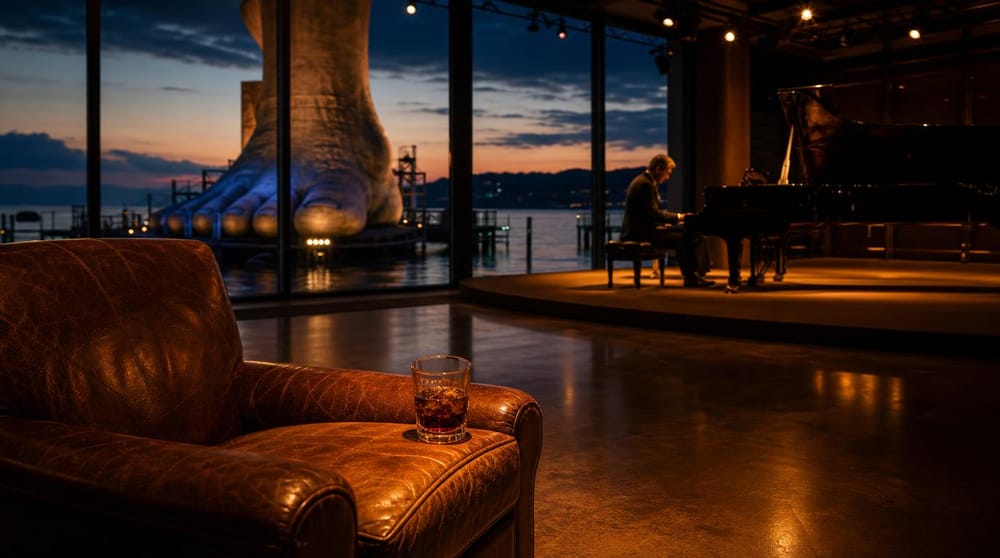
Und ich? Ich saß für einen Moment allein auf einem Ledersessel, mit einer Cola in der Hand. Neben mir das Bühnenbild von Aida, halbfertig, aber bereits magisch beleuchtet. Da setzte sich plötzlich ein Mann an einen Flügel, schräg gegenüber von mir, und begann zu spielen. Für Elise. Es war das einzige klassische Stück, das ich damals mochte.
Ich saß da, hörte zu, beobachtete diesen Mann und die Töne, die durch die leere Halle schwebten, und dachte nur einen einzigen Satz: Du hast es geschafft.
Nicht mehr. Nur das.
Es war das unbeschreibliche Gefühl, aus dem dunklen Tal herausgekommen zu sein. Es war der Moment, in dem ich alles widerlegt hatte, was man jemals in mich hinein diagnostiziert und prognostiziert hatte. Viktor Frankl, der Psychiater und Überlebende, sagte:
"Das Leben hat einen Sinn und behält ihn unter allen Umständen, auch im Leiden."
An diesem Abend, bei diesen Tönen, verstand ich das. Mein Leiden war nicht umsonst gewesen. Es hatte mich genau auf diesen Ledersessel geführt.
Wie man sich denken kann, sind Selbsthilfegruppen für Menschen wie mich ein Anker. Sie sind das Fundament, das uns im Alltag stabilisiert, wenn die See gewohnheitsmäßig rau wird. Auch wenn ich selbst seit vielen Jahren in keine Selbsthilfegruppe mehr gehe, war ich immer tief mit ihnen verbunden. Irgendwann wurde aus dieser Verbundenheit Beruf.
Als Corona die Welt lahmlegte und die Isolation für suchtkranke Menschen lebensbedrohlich wurde, habe ich hunderten Selbsthilfegruppen gezeigt, wie man sich online sicher treffen kann. Rumi, der persische Dichter, schrieb:
"Die Wunde ist der Ort, an dem das Licht in dich eindringt."
Aus meiner eigenen Wunde, aus meinem Wissen um die absolute Notwendigkeit von sicheren Räumen, entstand schließlich mit vielen Umwegen ZenDiT. Es entstand aus dem puren Bedarf, sichere digitale Räume zu haben oder zu gestalten, die sich schützend um genau solche Menschen legen. Räume, in denen Würde gewahrt bleibt.
Und ich muss an dieser Stelle etwas klarstellen, weil es mir wichtig ist: ZenDiT ist nicht ich. ZenDiT ist meine Frau, die dieses Projekt von Anfang an mitträgt und mitdenkt. Es ist unser IT-Mann, der uns seit Jahren durch dick und dünn begleitet, der da ist wenn es brennt und wenn es läuft. Es sind eine Menge internationaler Freiberufler, die uns seit Jahren unterstützen. Unstrukturiert, nach Bedarf, nach Auftrag, nach Vertrauen. Kein Organigramm, kein Konzerndenken. Eher eine kleine EduTech-Manufaktur. Ein digitaler Familienbetrieb, wenn man so will. Und genau das ist seine Stärke. Weil die Menschen, für die wir arbeiten, auch keine Konzerne sind. Sie sind Menschen. Verletzliche, starke, kämpfende, ankommende Menschen.
Die größten Projekte in diesem Rahmen waren ein professioneller Suchthilfeverbund mit mehreren Kliniken und Beratungsstellen sowie ein kompletter Suchtselbsthilfeverband einer ganzen Diözese. Wir bauten Brücken, wo vorher nur Isolation war.
Und dann kam das Gestern.
Gestern war ein erstes Sondierungsgespräch mit dem Bundesverband dieses Selbsthilfeverbands. Nicht mit einem Diözesanverband, nicht mit einer Beratungsstelle. Mit dem Bundesverband. Und ich war es, der auf sie zugegangen ist. Aus einem Impuls heraus. Keine große Strategie dahinter, kein ausgeklügelter Plan. Nur dieses Gefühl, das ich inzwischen kenne: Jetzt. Schreib jetzt.
Dreißig Minuten Videokonferenz. Eine Frau auf der anderen Seite, die seit dreizehn Jahren Online-Suchtberatung kennt, die vier Plattformwechsel hinter sich hat, die weiß wie es sich anfühlt, Anhängsel einer fremden Infrastruktur zu sein. Eine Frau, die nicht beeindruckt werden will, sondern die verstanden werden will.
Wir haben nicht präsentiert. Wir haben einander zugehört. Wir haben gegenseitig Fragen gestellt. Wir haben gesagt, was wir können, und wir haben gesagt, was wir nicht können. Und genau das, dieser Moment der Ehrlichkeit über die eigenen Grenzen, war das Stärkste, was wir in diesem Gespräch hatten.
Denn das ist das Paradox des langen Weges: Wer wirklich unten war, wer wirklich weiß wie sich Würdelosigkeit anfühlt, der muss sie anderen nicht mehr verkaufen. Der kann einfach sagen:
Bei uns wären sie Hausherr:in, nicht Anhängsel. Alles andere prüfen wir gemeinsam, ehrlich, und ich sage ihnen auch, was nicht geht.
Das ist kein Pitch. Das ist eine Haltung. Und diese Haltung kommt nicht aus einem Businessplan. Sie kommt aus drei Reanimationen, aus einem Ledersessel in Bregenz, aus hunderten Selbsthilfegruppen, die in der Pandemie nicht allein gelassen werden wollten. Sie kommt aus dem Wissen, was es bedeutet, wenn ein Mensch einen sicheren Raum braucht und keinen findet.
Dietrich Bonhoeffer schrieb:
"Wer Gemeinschaft will ohne Alleinsein, der stürzt in die Leere der Worte und Gefühle."
Ich habe das Alleinsein gründlich kennengelernt. Vielleicht ist das der Grund, warum ich Gemeinschaft nicht als Produkt verkaufe, sondern als das begreife, was sie wirklich ist: ein Atemzug für Menschen, die gerade keine Luft mehr haben.
Wir sind drin. Wir sind im Rennen. Und ja, wir sind vielleicht sogar der Favorit. Aber das ist nicht das, was mich gestern bewegt hat. Was mich bewegt hat, ist etwas anderes. Es ist die Erkenntnis, dass der Weg von der Diagnose "noch drei Monate" bis zu einem Bundesverband, der auf dich zukommt, kein gerader ist. Er ist lang, er ist kurvig, er ist manchmal unsichtbar. Und er führt durch viele dunkle Täler, durch viele Momente, in denen man nicht weiß, ob man je wieder ans Licht kommt.
Aber er führt. Wenn man geht.
Als ich gestern den Laptop zuklappte, saß ich einen Moment still. Kein Triumphgefühl, keine Erleichterung. Nur diese stille, fast zärtliche Gewissheit, die ich schon einmal kannte. Vom Ledersessel in Bregenz. Von der Cola in der Hand. Vom halbfertigen Bühnenbild des riesigen Fußes im Bodensee.
Und wieder spielte jemand, ganz leise, nur für mich.
Für Elise.
Für Elise: The Quiet Notes of Arrival
Yesterday was another one of those moments—one of those “Für Elise” moments in my life. Many people call them defining moments, although at first, they rarely seem quite so significant. It is more like a pause. A deep breath after a very, very long journey.
But what am I actually talking about?
I come from a life shaped by addiction. A life that, for many years, was filled with dependency, pain, and the constant struggle against demons that other people could not even see. It was a dark valley. I went through therapy and countless stays in clinics. Three times, I stared death in the face. Three times, I was resuscitated.
Eventually, there was that one diagnosis—that single sentence from the doctors that hung in the room like a cold verdict:
“You have three months left to live if you carry on like this.”
The philosopher Albert Camus once wrote: “One must imagine Sisyphus happy.” What he meant was that there is a dignity of its own in the struggle itself, in the relentless effort of pushing back against everything absurd and destructive.
But when I was at rock bottom, it did not feel like dignity.
It felt like the end.
Yet things turned out differently.
I survived. I got clean. I found stability. And suddenly, as though I had been given a second life, I found myself at the beginning of my degree in Social Work.
Then, one evening, something happened.
A professor was organising an international conference. I asked him who would be responsible for the media documentation and suggested:
“Couldn’t we students take care of it?”
He said yes.
And so, in the end, twelve students found themselves sitting in the Bregenz Festival and Congress Centre, surrounded by the who’s who of the international healthcare sector. Even one of Obama’s healthcare advisers was there.
It was unbelievable.
Everything was running at full speed. Everyone was busy. The air vibrated with importance and deadline pressure.
And me?
For a moment, I was sitting alone in a leather armchair with a Coke in my hand. Next to me was the stage set for Aida, only half finished, yet already illuminated in a way that made it seem magical.
Then, suddenly, a man sat down at a grand piano diagonally across from me and began to play.
Für Elise.
It was the only piece of classical music I liked at the time.
I sat there, listening, watching the man and the notes drifting through the empty hall, and I thought only one sentence:
You made it.
Nothing more.
Just that.
It was the indescribable feeling of having emerged from the dark valley. It was the moment in which I had disproved everything that had ever been diagnosed or predicted about me.
Viktor Frankl, the psychiatrist and survivor, once said: “Life has meaning under all circumstances, even in suffering.”
That evening, as I listened to those notes, I understood.
My suffering had not been in vain.
It had led me to that exact leather armchair.
As you might imagine, self-help groups are an anchor for people like me. They are the foundation that keeps us steady in everyday life when the seas inevitably become rough.
Even though I have not attended a self-help group myself for many years, I have always remained deeply connected to them.
At some point, that connection became my profession.
When the coronavirus pandemic brought the world to a standstill and isolation became life-threatening for people struggling with addiction, I showed hundreds of self-help groups how to meet safely online.
The Persian poet Rumi wrote: “The wound is the place where the light enters you.”
From my own wound—from my understanding of the absolute necessity of safe spaces—ZenDiT eventually emerged, after many detours.
It was born from the fundamental need to have or create safe digital spaces that protect the very people who need them most.
Spaces in which human dignity is preserved.
And at this point, I need to make something clear, because it matters to me:
ZenDiT is not me.
ZenDiT is my wife, who has supported and shaped this project from the very beginning. It is our IT specialist, who has stood by us through thick and thin for years, who is there when everything is on fire and when everything is running smoothly.
It is also a large number of international freelancers who have supported us over the years. Informally, according to need, according to the project, and according to trust.
There is no organisational chart. No corporate mentality.
It is more like a small EdTech workshop. A digital family business, you might say.
And that is precisely its strength.
Because the people we work for are not corporations either.
They are people.
Vulnerable people. Strong people. People who are struggling. People who are finding their way.
The largest projects we have completed in this context were a professional addiction support network involving several clinics and counselling centres, and the entire addiction recovery association of a whole diocese.
We built bridges where previously there had been only isolation.
And then came yesterday.
Yesterday, we had our first exploratory meeting with the national organisation of that self-help association.
Not with a diocesan organisation. Not with a counselling centre.
With the national organisation.
And I was the one who had approached them.
It happened on impulse. There was no grand strategy behind it, no sophisticated plan.
Only that feeling I have come to recognise:
Now. Write to them now.
A thirty-minute video call.
On the other side was a woman who had thirteen years of experience in online addiction counselling. A woman who had lived through four platform migrations and knew what it felt like to be no more than an appendage of someone else’s infrastructure.
A woman who did not want to be impressed.
She wanted to be understood.
We did not give a presentation.
We listened.
We asked questions.
We explained what we could do, and we explained what we could not do.
And that—this moment of honesty about the limits of our own capabilities—was the strongest thing we brought into that conversation.
Because that is the paradox of the long journey:
When you have truly been at the bottom, when you genuinely know what it feels like to be stripped of your dignity, you no longer need to sell indignity to anyone else.
You can simply say:
With us, you would be in control of your own house, not an appendage. We would examine everything else together, honestly—and I would also tell you what cannot be done.
That is not a sales pitch.
It is an attitude.
And that attitude does not come from a business plan.
It comes from three resuscitations, from a leather armchair in Bregenz, and from hundreds of self-help groups that did not want to be left alone during the pandemic.
It comes from knowing what it means when a person needs a safe space and cannot find one.
Dietrich Bonhoeffer wrote: “Those who love their dream of a community more than the community itself become destroyers of that community.”
I became thoroughly acquainted with being alone.
Perhaps that is why I do not sell community as a product, but understand it for what it truly is:
A breath for people who can no longer breathe.
We are in.
We are in the running.
And yes, we are the favourite.
But that is not what moved me yesterday.
What moved me was something else.
It was the realisation that the road from the diagnosis “three months left to live” to a national organisation approaching you is not a straight one.
It is long. It twists and turns. Sometimes it is invisible.
And it passes through many dark valleys, through countless moments when you do not know whether you will ever see the light again.
But it leads somewhere.
As long as you keep walking.
When I closed my laptop yesterday, I sat silently for a moment.
There was no sense of triumph. No relief.
Only that quiet, almost tender certainty I had felt once before.
In the leather armchair in Bregenz.
With a Coke in my hand.
Beside the half-finished stage set, with its enormous foot rising from Lake Constance.
And once again, someone was playing, very softly, just for me.
Für Elise.